

Photographing Nightjars
A few weeks ago I got to see a creature, I had always dreamt of seeing in the wild. Nightjars, by all accounts, are some of the most ‘elusive’ birds to find in the UK. Finding them is a feat in itself as they are expertly camouflaged. They tend to favour moorland and heathland where their mottled grey/brown/black plumage that helps them expertly blend into surroundings
To add to the difficulty, they are only here for a few months in the summer each year when they fly up from central Africa to breed. Add to that yet another layer: they are crepuscular. Meaning that they only fly and hunt in the twilight hours.
Luckily I managed to recruit some help in finding them. A few months ago I bumped into Richard Castell while out shooting landscapes. We got chatting and it turned out he was an ecologist that specialised in ornithology, and had been observing nightjars in north Wales for sometime. In the summer he offered to take me out one morning to see if we could find some of these almost mythical creatures.
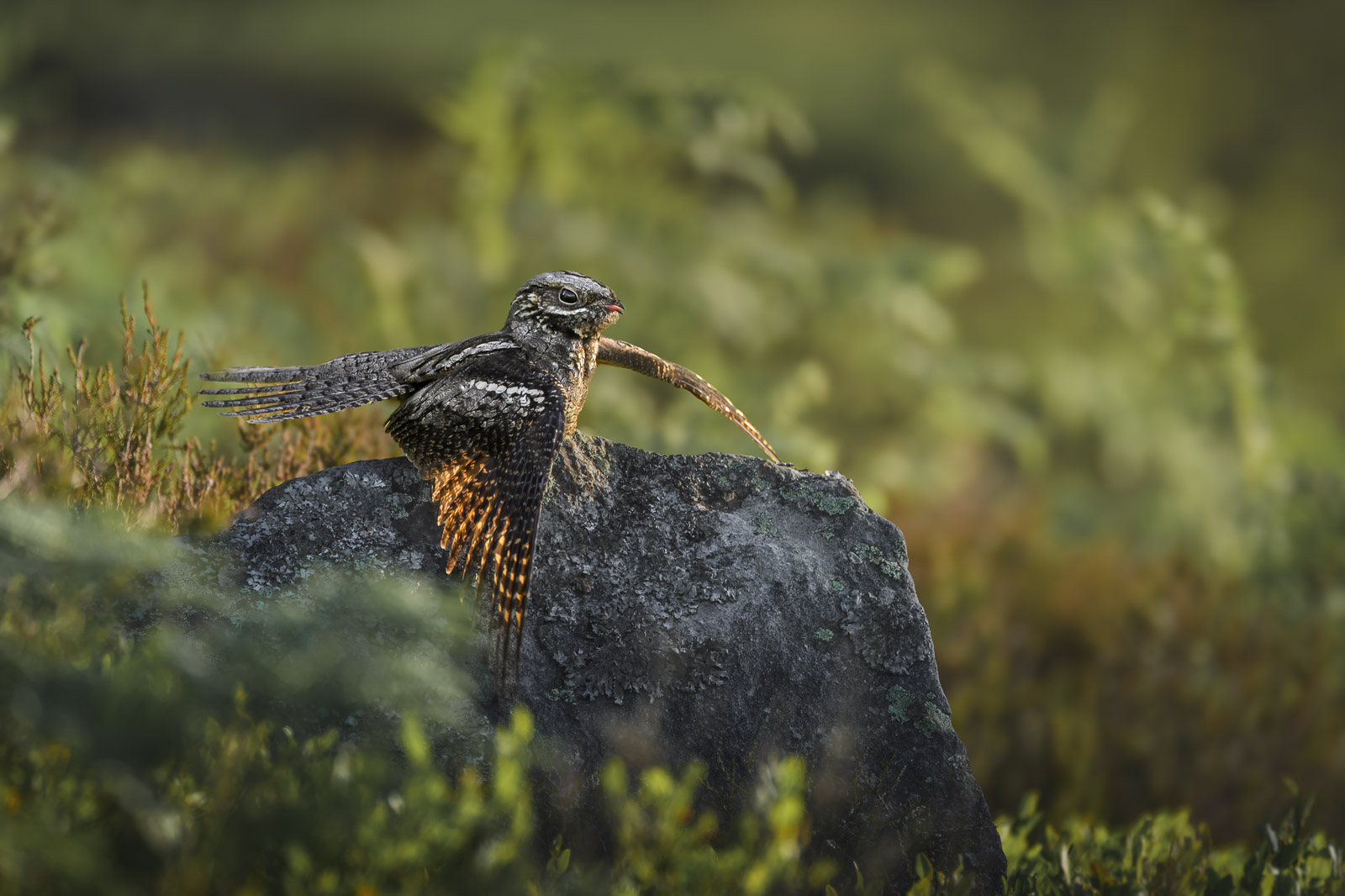
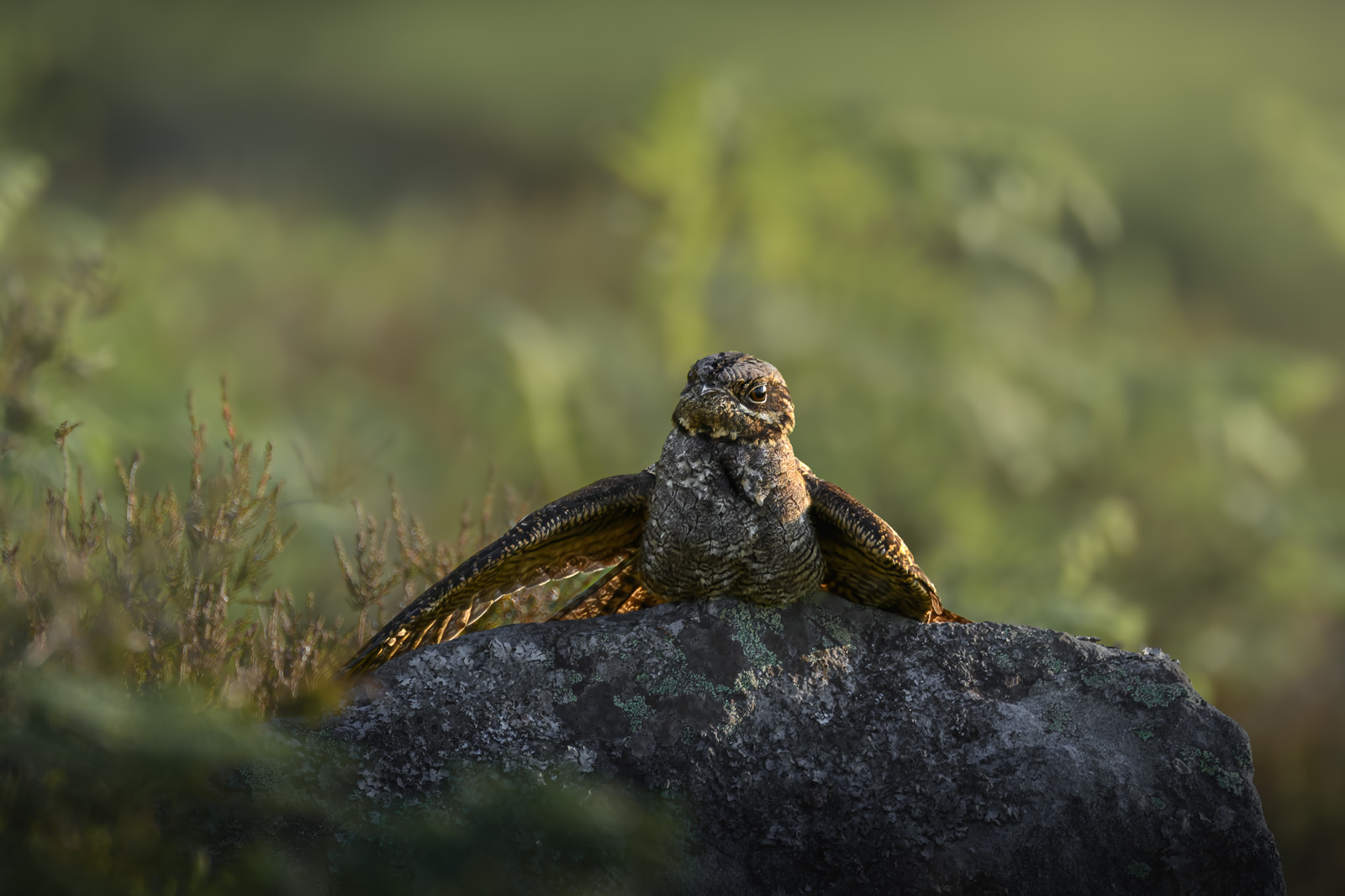
Cue a text from Richard saying that we needed to meet in the early hours of the morning to walk up to where he thought the birds were. No easy task first thing. These are the perils of doing wildlife photography in the UK during summer.
I was accompanying Richard, who is an ornithologist, while he monitored the nest. This bird, which is a female, was flushed by Richard and landed on a rock near where I was sitting away from the nest and displayed distraction behaviour as indicated by its wing position.
The check on the nest was carried out in accordance with British Trust for Ornithology (BTO) guideline by a professional in their field. Richard is also the co-author of the BTO’s Field Guide for Monitoring Nest. I have included a link to this publication for anyone who is interested in finding out more.
https://www.bto.org/our-work/science/publications/books-guides/field-guide-monitoring-nests
Visiting a bird like this near its nest is not something I would have undertaken myself. My ethos around photographing animals is to practice ethical wildlife photography. I have been exposed to wildlife all my life, and would never endanger, distress or harm an animal just to get a photo. These photos were taken with great care and under the guidance of an expert ornithologist.
Luckily, the Nightjar landed on a rock not from where I had set up. I fired off a few frames and then it was gone. Back to hiding in the heather. Albeit short, the experience of seeing and actually get a few photographs of a bird I never thought I’d see was incredible. I’m truly indebted to Richard for trusting me enough to show me where the nightjars were and also for all the knowledge he shared with me about them.
I hope you enjoy the pictures and would love to hear your thoughts!
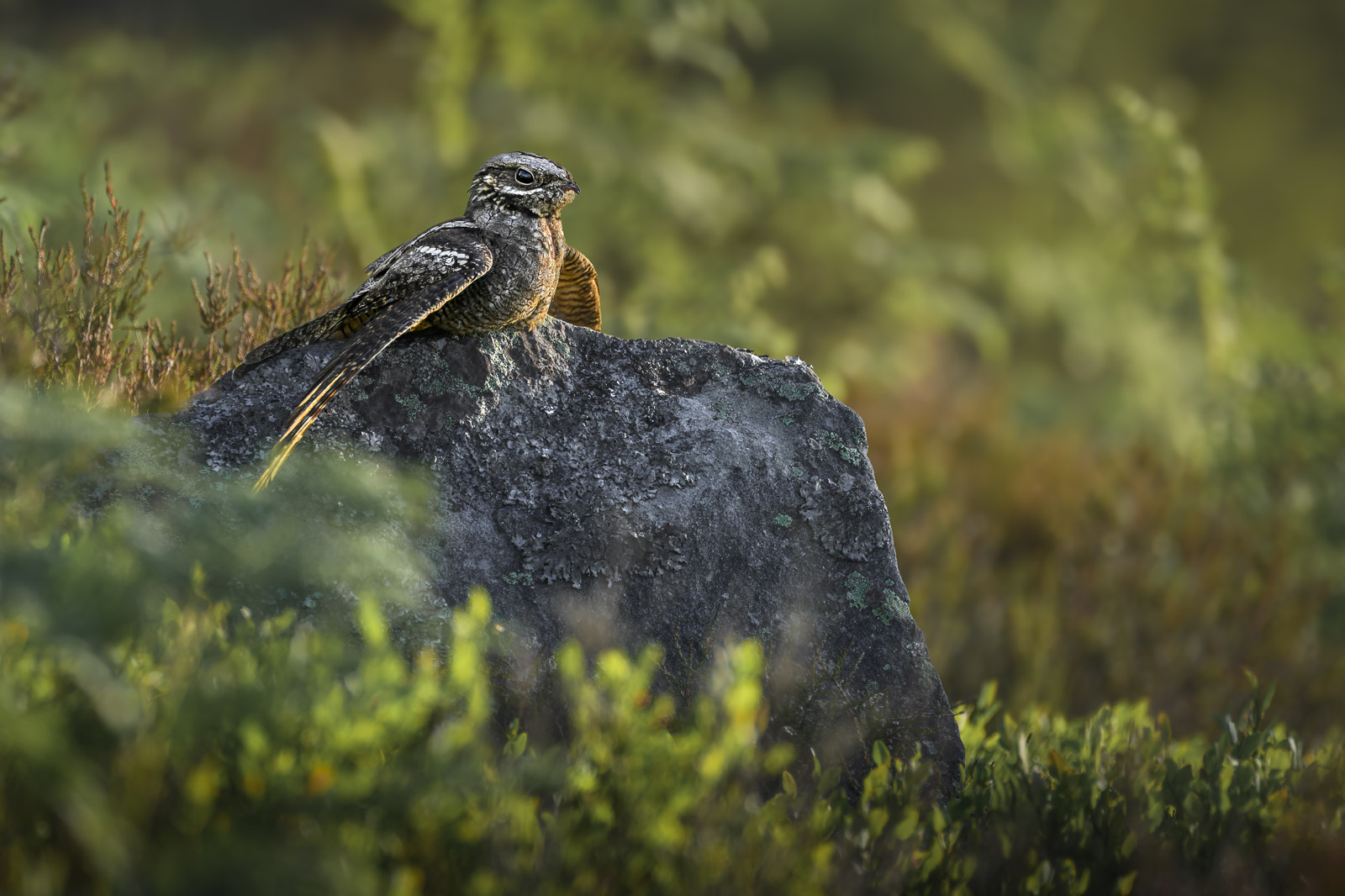
CAMERA & SETTINGS
Nikon Z8 + 100-400mm f/4.5-5.6 VR S
400mm | f/5.6 | 1/1250s | ISO640 | AF-C


